Your lawn is a complex ecosystem. Let's treat it like one.
Building Your Soil Biology and Fungal Networks
Your turf grass and other plants have naturally evolved to trade sugar with mycorrhizal fungi in soil. These fungal networks bring water and phosphorus to plants from parts of the soil that roots cannot reach on their own. The plants return sugar to the fungi in exchange. This relationship is especially important in the Piedmont, where we are experiencing more seasonal drought, and where our Piedmont clay is notoriously good at keeping Phosphorus trapped without the help of Mycorrhizae.

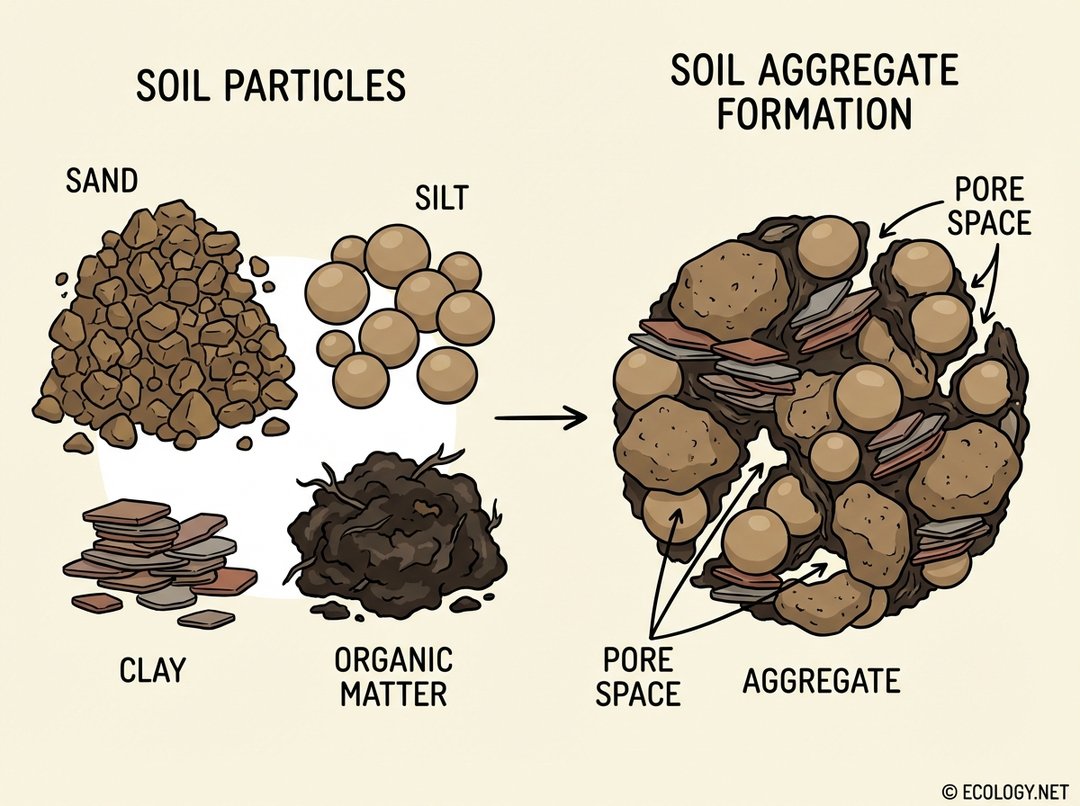
Mycorrhizae also form soil "aggregates". Soil aggregates create improved pore space in your lawn that increases the amount of water your soil can soak in and retain.
The Problems with The Synthetic Fertilizer Approach
The status quo in lawn care today is using synthetic fertilizer to keep grass alive. Nutrients from a bag are handed directly to the plant, on a schedule. This keeps your grass alive, but it also shuts down the relationship between plant and mycorrhizal fungi. A plant given free phosphorus has no reason to keep paying for it. So, it stops sending sugar down, and a partnership 400 million years in the making quietly dissolves in a season or two.
Nothing dies. But the fungal network that was finding water in August is gone. The threads that were binding your clay into aggregates are gone, and the soil closes back up. Rain that used to soak in now sheets off; carrying a portion of that same applied fertilizer downhill into the storm drain, and eventually into Falls Lake or Jordan Lake. The reservoirs nearly a million people drink from - both of which have been listed as impaired for over a decade.
So next season the lawn needs more water inputs. And more fertilizer. And the year after that, more again.
The synthetic fertilizer approach is like renting a green lawn, one season at a time. Building living soil is an investment in your lawn's autonomy.
We aim to build the living soil that allows your lawn to feed itself, hold more water, and get healthier every year.
Here's What We Do Instead:
We test. We offer free soil sampling sent to a NC Department of Agriculture lab. That way we don't have to guess.
We fix the pH. Usually the highest-leverage move on the list, and the cheapest. Lime, at the rate the test specifies, unlocks nutrients your soil already has.
We aerate. Core aeration pulls plugs from the soil, opening channels for oxygen, water, and the amendments that follow.
We Offer A Menu of Soil Amendments:
-Organic compost locally sourced from the City of Raleigh waste center to feed the biology that rebuilds structure. We use it sparingly, and we watch the phosphorus number. Because there's no version of eco-friendly that involves loading more P into an impaired reservoir.
-Charged biochar to introduce permanent pore space and nutrient holding capacity.
-Overseeding where needed (cool season grasses only in fall)
-Organic nitrogen sources if needed. We use feather meal, or blood meal when we need something faster. Both are organic, both are far gentler on the fungal network than a bag of synthetic. It's a bridge, not a subscription. We taper as the soil takes over.
And we can mow at 4 inches and leave the clippings. Free nitrogen, deeper roots, fewer weeds
Then We Get Out of the Way
The network comes back on its own. Once the free nutrients stop arriving, the grass has a reason to start trading again. The fungi have been waiting.
Each year the soil holds more water, needs less input, and does more of the work itself. The service should get smaller over time.
Most lawn programs are designed so you need them forever. This one is designed so you don't.